
Citi Centre, Karve Road, Pune | Call For Appointment : +91 83800 80201

1H7A2209

Root Canal Treatment


What are Root Canal Treatment?

Root canal treatment is indicated when the pulp tissue of the tooth is infected; most commonly due to tooth decay. In root canal treatment, the infected tissues and bacteria throughout the canal are cleaned thoroughly. Thus, resulting in pain relief.

Root canal treatment is preferred over tooth extraction as it eliminates pain and infection while retaining the tooth’s form and function.

Advances in technology, makes root canal treatment:
  • Single visit procedure
  • Pain-free and comfortable treatment option.

When is Root Canal Treatment indicated?

The tooth consists of 3 layers (much like our Earth):
  • Outermost – Enamel: the strongest substance in the body
  • Middle – Dentin: Decay/exposure of dentin mostly causes sensitivity.
  • Innermost (Core) – Pulp: Rich in blood supply and nerves.

Root canal treatment is indicated when decay/bacteria invades the pulp that forms the core of the tooth. The pulp may also be infected due to an injury. In long-standing tooth decay, the infection slowly reaches the pulp and finally infects the entire tooth up to the bone. This causes severe throbbing pain.

In this condition, Root Canal Treatment not only reduces the pain and infection, but also maintains the form and function of the tooth.

On the other hand, if left untreated, it may lead to painful episodes and eventually breakdown of the tooth. In such a scenario, tooth removal is the only treatment option.

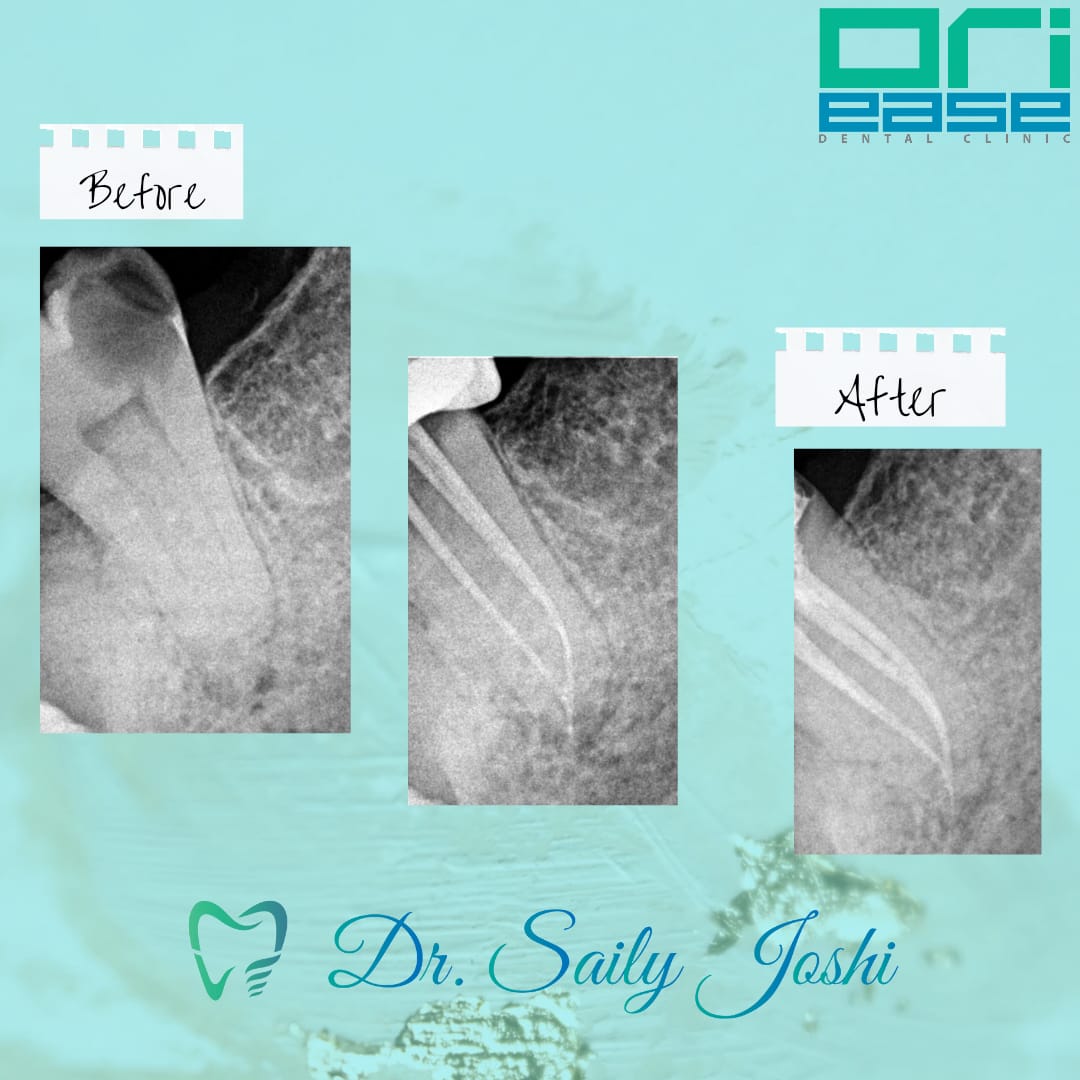
Before & After Picture Gallery

Single Tooth Replacement

Multiple Tooth Replacement

Root Canal Treatment Procedure

A root canal treatment is a four-step process:
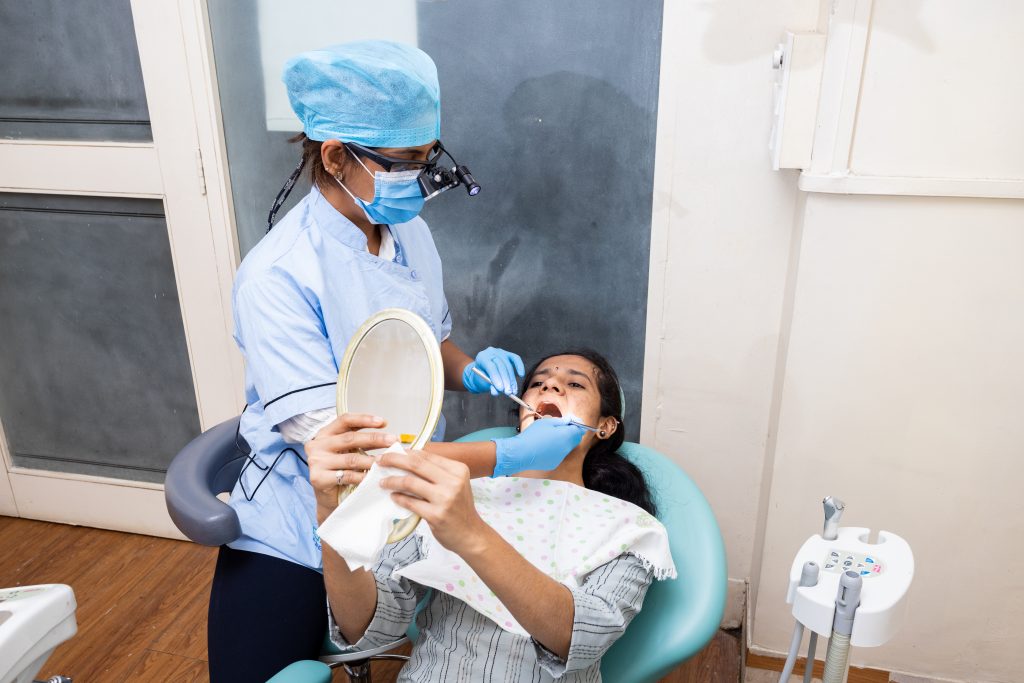
Step 1: First, the tooth is numbed with local anaesthesia. Then, a dental dam, (a small sheet of rubber) is placed to isolate the tooth to keep it clean and dry during the procedure.

Step 2: The infected pulp tissue is cleaned thoroughly step-by-step. An antiseptic solution is used to flush off any residual bacteria and debris.

Step 3: After the cavity inside the root is thoroughly cleaned and dried, it is filled with root filling material precisely. Next, the cavity within the tooth is filled with permanent tooth-coloured material or sometimes a temporary filling. The next appointment is planned after a minimum of 72 hours, when the inflammation in the surrounding tissues of the tooth has reduced.

Step 4: The remaining tooth structure is accessed for strength and durability. If the tooth is weak and unable to retain its structure under normal chewing forces, a permanent crown is fabricated to strengthen the weakened tooth structure. In some cases, a small supporting post may be needed that is placed inside the root chamber to make the crown or restoration durable.

Video Testimonials

  Single Visit Root Canal Treatment

  Happy Client of OriEase

Aftercare

  • Antibiotics and anti-inflammatory medications may be required.
  • Maintaining good oral hygiene is extremely important with regular brushing and teeth flossing.
  • Given the treated area is numb, there are chances of accidentally biting the cheek or tongue while chewing. So, it is advisable to avoid eating until the numbness wears off.
  • As the tooth structure is fragile, hard and crunchy foods should be avoided for a few days after a root canal treatment.
  • In between appointments, the cavity is filled with a fast-setting temporary filling. Sometimes, some of the filling may wear off. If the entire filling wears off you need to consult the dentist immediately.
  • An additional follow-up visit may be needed to x-ray the treated tooth and to ensure that all signs of infection have been resolved.
  • Teeth that have undergone root canal procedure can stay healthy for the rest of your life with proper care!
   

Frequently Asked Questions

No, an infected tooth cannot heal itself. In fact, the infection can spread to other areas of your jaw causing serious pain. Treating an infected tooth requires medications or root canal treatment.

No, a root canal treatment is pain-free. Before proceeding with the root canal treatment, a dentist will use local anaesthesia to numb the infected area ensuring a painless treatment.

Once the root canal treatment is completed, the treated tooth will heal within a few days. Patients might experience some pain once they awaken from anaesthesia; this is likely to end within a few days due to medication.

Most root canal treatment can be successfully completed by a dentist in a single day. In certain cases of serious infection or back tooth, a dentist may give 2-3 days appointment for finishing the treatment.