


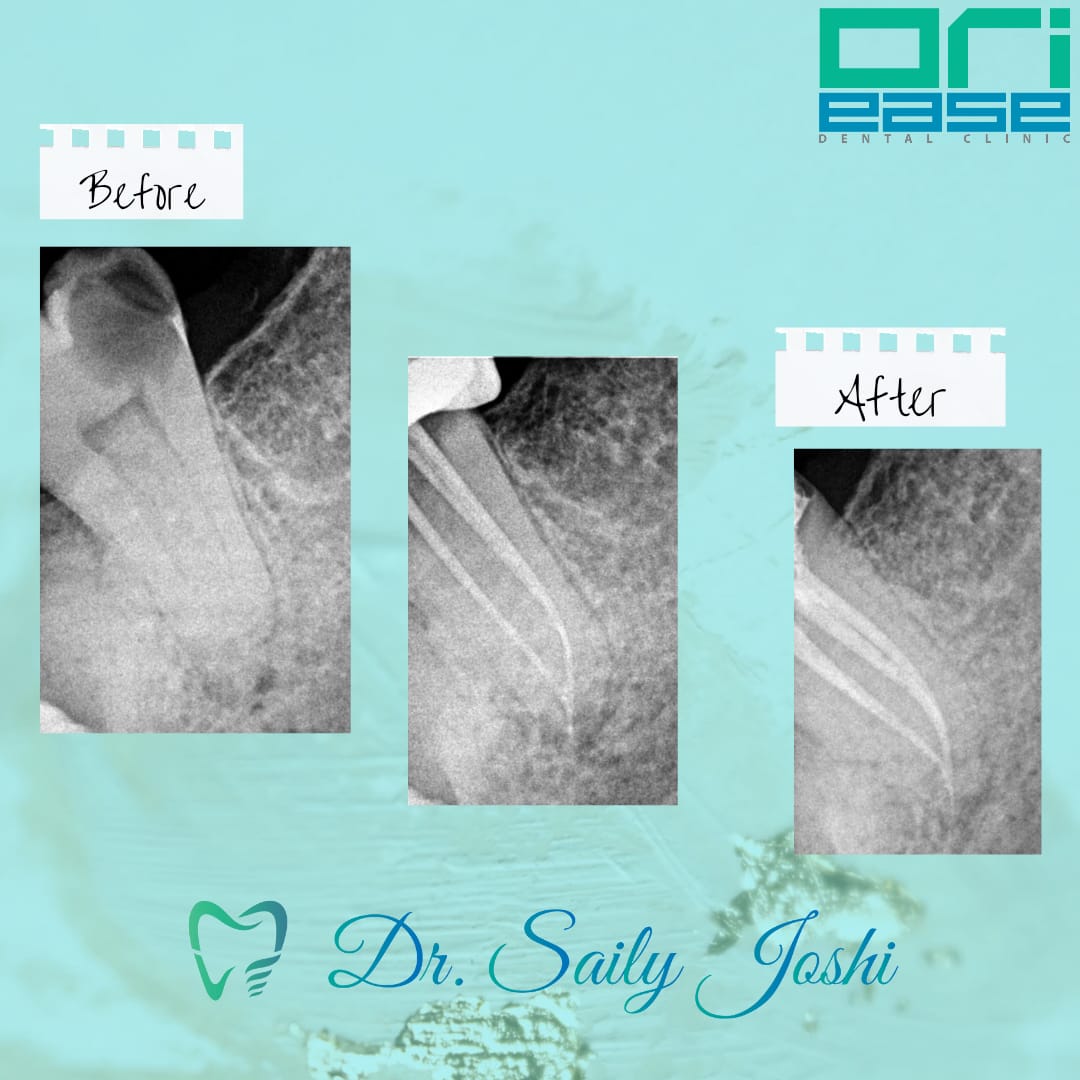
A root canal treatment is a four-step process:
Step 1: First, the tooth is numbed with local anaesthesia. Then, a dental dam, (a small sheet of rubber) is placed to isolate the tooth to keep it clean and dry during the procedure.
Step 2: The infected pulp tissue is cleaned thoroughly step-by-step. An antiseptic solution is used to flush off any residual bacteria and debris.
Step 3: After the cavity inside the root is thoroughly cleaned and dried, it is filled with root filling material precisely. Next, the cavity within the tooth is filled with permanent tooth-coloured material or sometimes a temporary filling.
The next appointment is planned after a minimum of 72 hours, when the inflammation in the surrounding tissues of the tooth has reduced.
Step 4: The remaining tooth structure is accessed for strength and durability. If the tooth is weak and unable to retain its structure under normal chewing forces, a permanent crown is fabricated to strengthen the weakened tooth structure. In some cases, a small supporting post may be needed that is placed inside the root chamber to make the crown or restoration durable.

No, an infected tooth cannot heal itself. In fact, the infection can spread to other areas of your jaw causing serious pain. Treating an infected tooth requires medications or root canal treatment.
No, a root canal treatment is pain-free. Before proceeding with the root canal treatment, a dentist will use local anaesthesia to numb the infected area ensuring a painless treatment.
Once the root canal treatment is completed, the treated tooth will heal within a few days. Patients might experience some pain once they awaken from anaesthesia; this is likely to end within a few days due to medication.
Most root canal treatment can be successfully completed by a dentist in a single day. In certain cases of serious infection or back tooth, a dentist may give 2-3 days appointment for finishing the treatment.
